Contents
- 1 Introduction
- 2 Why Internal Links Are Essential for Organic Growth
- 3 The SEO Optimize Internal Links Checklist
- 4 Create a Site Structure That Search Engines Can Understand
- 5 Optimize Internal Links for Maximum SEO Impact
- 6 Run an Internal Link Audit Before Rankings Suffer
- 7 Use Internal Links to Build Authority Across Your Website
- 8 Unlock Better Insights With an Internal Link Analysis Tool
- 9 Scaling SEO Internal Links WordPress Efficiently
- 10 Conclusion
- 11 Frequently Asked Questions
- 11.1 What does it mean to SEO optimize internal links?
- 11.2 Why should businesses SEO optimize internal links?
- 11.3 How to create an internal linking strategy that works?
- 11.4 How to structure internal links on my website?
- 11.5 Is it better to build links to my homepage or inner pages?
- 11.6 What is an internal link audit?
- 11.7 What are orphan pages?
- 11.8 What is an internal link analysis tool?
- 11.9 Can a WordPress plugin for internal linking improve SEO?
- 11.10 Can Link Whisper help with SEO internal links WordPress?
SEO optimize internal links is often the difference between content that ranks and content that gets overlooked.
You may already have valuable content on your website. But without strategic internal linking, search engines may overlook its value. Users may never find it.
Introduction
Internal linking helps distribute authority and strengthen topical authority. It improves crawlability and guides visitors to relevant content.
When used strategically, it connects individual pages into a stronger content ecosystem. The result is better rankings, higher engagement, and more opportunities for conversion.
According to Google Search Central, internal links help Google discover pages and understand site structure.
This guide shows how to seo optimize internal links for better visibility, authority, and user experience.
Why Internal Links Are Essential for Organic Growth
Many SEO conversations focus on content creation and backlinks. While both are important, internal links determine how effectively that content performs once it exists.
Search engines use internal links to discover pages. It helps search engines understand content relationships and page importance. Without a strong internal linking structure, even high-quality content can struggle to achieve its full ranking potential.
How Internal Links Help Search Engines Understand Content
Every internal link provides context.
When search engines crawl a page, they analyze the links pointing to and from that page. These relationships help them understand content hierarchy, topic relevance, and website structure.
A page with strong internal support sends a clear signal that it plays an important role within the website.
This is why internal linking for SEO remains a core optimization tactic. It helps search engines connect related content. It also shows how individual pages contribute to a broader topic
How Internal Links Improve User Experience
Internal links are not just for search engines.
Visitors often arrive on a website looking for answers to a specific question. Once they find useful information, they frequently want to explore related topics.
Strategic internal links guide users toward additional resources. It helps them discover more content without leaving the site. This improves engagement, increases page views, and creates a smoother user journey.
Why Internal Linking Builds Topical Authority
Search engines increasingly reward websites that demonstrate expertise across an entire subject area.
This is where topical authority becomes a competitive advantage.
Strategic internal links help search engines better understand your expertise across a topic. Instead of seeing disconnected articles, search engines see a cohesive body of knowledge.
The result is stronger topical authority and greater trust in your content. Strong topical authority is often built through thoughtful internal linking rather than content volume alone.
The SEO Optimize Internal Links Checklist
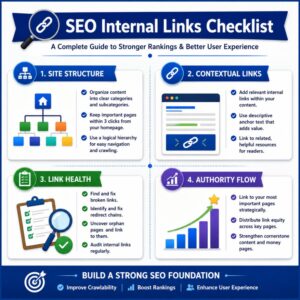
Before adding more links, it is important to understand what an effective internal linking strategy actually looks like.
The most successful websites focus on four areas:
- Site structure and architecture
- Contextual link placement
- Link health and maintenance
- Strategic authority distribution
Together, these elements create a stronger foundation for SEO success. They help search engines crawl your site and users discover valuable content.
Ready to improve your internal linking? Explore what Link Whisper can do.
Create a Site Structure That Search Engines Can Understand
A strong internal linking strategy starts with structure.
If your website architecture is confusing, even the best content can struggle to perform.
Build Topic Clusters That Strengthen Topical Authority
One of the most effective ways to build topical authority is through topic clusters.
A topic cluster connects a pillar page with related content to create a cohesive content hub. These pages are connected through internal links, creating a clear content hierarchy.
For example, A pillar page can connect related topics like crawl depth, anchor text, and link equity. It can also connect to related internal link audit guides.
This structure helps search engines understand the breadth of your expertise. Meanwhile, it also reinforces topical authority across the topics. This makes it easier for search engines to view your website as a trusted resource.
Reduce Crawl Depth to Improve Content Discovery
Many websites unknowingly bury valuable content too deep within their architecture.
This creates a common SEO problem known as excessive crawl depth.
Crawl depth refers to the number of clicks required to reach a page from the homepage. The deeper a page sits within a website, the harder it may be for search engines and users to discover it.
A practical goal is keeping important pages within three clicks of the homepage whenever possible.
Reducing crawl depth improves accessibility and enhances crawl efficiency. This also ensures authority flows more effectively throughout the website.
Use Breadcrumbs to Reinforce Site Hierarchy
Breadcrumb navigation provides additional internal linking pathways. Meanwhile, it helps users understand where they are within a website.
From an SEO perspective, breadcrumbs reinforce content hierarchy and improve crawlability.
For large websites, breadcrumbs create a clearer site structure. This benefits both users and search engines.
Optimize Internal Links for Maximum SEO Impact
Not all internal links provide the same value.
The strongest links are placed strategically and serve a clear purpose within the content.
Use Contextual Links to Support Internal Linking for SEO
One of the most effective forms of internal linking for SEO is contextual linking.
Contextual links appear naturally within the body content where they provide additional value to readers.
For example, an article discussing site architecture may naturally link to a resource explaining crawl depth. It can also direct readers to an internal link audit guide.
These contextual relationships help search engines understand topic relevance. Meanwhile, it also improves the reader experience.
Effective internal linking for SEO always prioritizes relevance over quantity.
Use Strategic Anchor Text to Improve Visibility
Anchor text provides important signals about the destination page.
Generic phrases such as “click here” or “read more” offer very little context. Instead, use descriptive anchor text that clearly communicates the topic of the linked page.
For example, linking to a guide on internal linking for SEO provides far more value than a generic call-to-action.
The objective is clarity and relevance rather than keyword stuffing.
Quality Links Deliver Better Results
Adding excessive internal links can dilute their effectiveness.
Every link should contribute to the reader’s journey and support the surrounding content. A practical benchmark is maintaining approximately three to five relevant internal links per 1,000 words.
This keeps content readable while ensuring internal links remain meaningful.
Position Internal Links for Maximum Impact
Readers often engage most heavily with content near the beginning of an article. When relevant, place links to important resources within the opening sections.
This increases visibility while helping users discover valuable content sooner.
Run an Internal Link Audit Before Rankings Suffer
Internal linking issues rarely appear overnight.
They develop gradually as websites grow. This is why every website should perform a regular internal link audit.
A thorough internal link audit helps identify problems that may impact rankings, crawlability, and user experience.
Find and Fix Broken Internal Links
Broken links create dead ends for users and search engines. They can negatively affect user experience while wasting crawl resources.
The LinkWhisper WordPress plugin helps uncover broken links, orphan pages, and linking opportunities. Fixing these issues improves crawl efficiency and preserves link equity. This ensures users can navigate your content without interruption.
Identify Orphan Pages Hidden From Search Engines
Orphan pages are pages that receive no internal links from other pages on the website.
Even high-quality content can struggle to rank if search engines have limited pathways to discover it. One of the primary goals of an internal link audit is to identify orphan pages. This also integrates them into the broader content structure.
This not only improves discoverability but also strengthens content relationships across your website.
Strengthen Crawl Efficiency With Direct Link
Redirect chains can slow down crawling and dilute link equity.
Update internal links to point directly to the final URL whenever possible. This creates a cleaner experience for users and search engines.
It also helps search engines reach important pages faster and more efficiently.
Check Canonical and Protocol Consistency
Internal links should always point to the preferred version of a page.
Avoid linking to HTTP URLs, non-canonical pages, or noindex URLs. Consistent linking helps preserve link equity and improves crawl efficiency.
It also ensures search engines focus on the pages that matter most.
Use Internal Links to Build Authority Across Your Website
Internal links do more than connect pages. They help distribute authority across your website and reinforce the importance of key content.
A strategic internal linking structure helps key pages rank higher, drive traffic, and support business growth. It also helps search engines understand which pages deserve greater visibility.
Support High-Value Pages
Authority should flow throughout your website. Many websites direct most of their internal links to the homepage.
While the homepage is important, service, product, and revenue-generating pages often need extra support. Identify the pages that drive the most business value. Then strengthen them with relevant, SEO-optimized internal links.
This improves visibility and enhances authority distribution. This also helps important pages compete more effectively in search results.
Strengthen Content Connections
Every new piece of content creates an opportunity to strengthen existing pages.
Linking related resources helps search engines understand how topics connect across your website. It also encourages readers to explore additional content and spend more time engaging with your site.
Over time, these content relationships strengthen topical authority. They also create a more cohesive content ecosystem.
Turn Traffic Into Conversions
SEO success is not measured by rankings alone. Your informational content should also support business objectives.
Strategic internal links guide readers toward the next step. They connect informational content with conversion-focused pages.
This transforms internal linking into a revenue-supporting activity rather than a purely technical SEO task.
Strategic internal linking helps drive engagement and conversions. It also supports conversions and maximises the value of your organic traffic.
Not sure where to begin? Discover how Link Whisper simplifies internal linking.
Unlock Better Insights With an Internal Link Analysis Tool
As websites grow, managing internal links manually becomes increasingly difficult. This is where an internal link analysis tool becomes invaluable.
Find Pages That Need More Internal Support
Not every important page receives the internal support it deserves.
An internal link analysis tool helps identify pages that receive little internal authority despite their importance. These insights make it easier to prioritize optimization efforts.
Monitor Crawl Depth Across Your Website
Excessive crawl depth can make important pages harder to discover. An internal link analysis tool can quickly reveal pages with excessive crawl depth.
Addressing these issues can improve accessibility and strengthen authority flow.
Make Smarter Linking Decisions
An internal link analysis tool provides data-driven insights into link structure. It reveals how authority flows across the website and highlights areas for improvement.
This allows SEO teams to make smarter linking decisions. This also uncovers opportunities that might otherwise go unnoticed.
Scaling SEO Internal Links WordPress Efficiently
As a WordPress website grows, managing internal links becomes increasingly complex.
Without a structured approach, valuable pages can become disconnected. This limits their ability to rank and contribute to overall SEO performance.
Choosing the Right WordPress Plugin for Internal Linking
The Linkwhisper WordPress plugin for internal linking can help streamline optimization efforts.
It can uncover orphan pages and identify linking opportunities. This makes internal link management more efficient. However, automation should support strategy, not replace it.
Managing SEO Internal Links WordPress More Effectively
Strong SEO internal link WordPress strategies require ongoing maintenance.
Regular reviews help ensure important pages continue receiving internal support. They also keep content relationships relevant as new pages are added.
Over time, consistent optimization helps maintain a stronger and more connected website structure.
Why Internal Linking Is Essential for Best WordPress SEO
Many discussions around best WordPress SEO focus on technical improvements. This includes page speed, metadata, and mobile performance.
Internal linking plays an equally important role in SEO success. It helps search engines discover content and understand topic relationships.
A strong internal linking structure also improves crawlability. At the same time, it strengthens topical authority across your website.
It is a practical way to increase visibility, improve engagement, and support long-term organic growth.
Conclusion
To seo optimize internal links, turn individual pages into a connected content ecosystem. Internal linking is one of the simplest ways to improve SEO performance.
It helps important pages gain visibility. It also strengthens content relationships across your website.
Regular Optimization is essential as your content grows. The Link Whisper WordPress plugin can make this process more efficient. They help uncover linking opportunities. They also keep your content connected as your website grows.
The goal is not to create more content. It is to get more value from the content you already have.
Frequently Asked Questions
Why should businesses SEO optimize internal links?
Businesses that seo optimize internal links often see improvements in visibility, crawlability, and content discovery. It is also one of the most effective ways to get more value from existing content.
How to create an internal linking strategy that works?
Start by identifying your most important pages and supporting content. Then connect related topics through logical internal links to strengthen topical authority.
How to structure internal links on my website?
Build a clear content hierarchy and connect related pages naturally. Keeping important pages accessible also helps reduce crawl depth.
Is it better to build links to my homepage or inner pages?
The homepage is important, but it should not receive all the internal support. Service pages, product pages, and key resources also need links to improve visibility and performance.
What is an internal link audit?
An internal link audit reviews how pages are connected across your website. It helps uncover broken links, orphan pages, and missed linking opportunities.
What are orphan pages?
Orphan pages are pages that have no internal links pointing to them. Without internal support, they can be difficult for users and search engines to discover.
What is an internal link analysis tool?
An internal link analysis tool helps evaluate how authority flows across a website. It can identify underlinked pages and reveal opportunities to improve internal link distribution.
Can a WordPress plugin for internal linking improve SEO?
A WordPress plugin for internal linking can help streamline link management. It also uncovers relevant linking opportunities.
Can Link Whisper help with SEO internal links WordPress?
Yes. Link Whisper helps simplify SEO internal links in WordPress. This involves identifying linking opportunities and orphan pages. This also helps in maintaining a strong internal linking structure as your website grows.
Check if your site has the same issues.
Run a free audit right now. See your orphaned pages, broken links, and link health score in 60 seconds.
Check My Site