Contents
- 1 Introduction
- 2 Background
- 3 Impact of Poor Internal Linking
- 4 How Link Whisper Guided the Internal Linking
- 5 The Results of the Internal Link Audit
- 6 Conclusion
- 7 Frequently Asked Questions
- 7.1 What is an internal link audit and why is it important for a gardening website?
- 7.2 How can poor internal linking cause a gardening site to stop growing organically?
- 7.3 Why do some gardening articles rank while others remain invisible despite strong backlinks?
- 7.4 What does crawl depth mean, and how does it affect gardening content visibility?
- 7.5 How can an internal link audit reveal orphan pages in a gardening website?
- 7.6 How can Link Whisper help with internal linking?
- 7.7 What is a link equity distribution plan?
- 7.8 What role does anchor text play in internal linking for gardening articles?
- 7.9 What is an Internal link assessment and how often should it be performed?
- 7.10 What steps should a gardening website take to maintain internal linking as it grows?
Introduction
A site can publish excellent content and still fail to rank if the pages are not properly connected. This was the exact problem faced by a growing USA-based gardening website. The team consistently published high-quality “how-to articles” and “seasonal guides”, yet many pages never appeared in search results. Backlinks were strong, and the content delivered real value to readers. Yet organic growth had slowed to a crawl, rising by less than 3% over six months.
The issue wasn’t a lack of effort. It was the absence of a strategic internal link audit. Internal linking is not a secondary SEO task. It directly affects how search engines discover, understand, and rank content.
This case study explores how an internal link audit identified unseen structural problems. It also shows how a strategic internal linking approach unlocked hidden link equity across a large content site. The issue was not a lack of SEO effort, but the absence of a strategy for distributing internal authority.
Background
The Site Context and Strategic Challenge
Site Profile and Growth
The site in question was a WordPress content hub focused on educational and informational content. Over time, the site grew organically, with hundreds of posts published across multiple categories. The content was strong, the backlinks were healthy, and the technical SEO elements were mostly sound. Yet despite these strengths, the site’s organic growth had flattened.
The gardening site had thousands of articles on topics like vegetable gardening, composting, lawn care, and seasonal planting guides. Despite this strong content base, newer posts never gained visibility, even when they covered high-demand gardening topics.
The Core Internal Linking Problem
The strategic challenge was clear, the site had become a content library without a coherent internal link structure. Internal links were created naturally, but not strategically. High-performing posts continued to attract traffic, while newer posts and topic clusters struggled to gain traction. The core problem was that link authority was trapped in a limited set of pages and was not being distributed effectively to other pages that deserved it.
For example, the site’s best-performing post, “Tomato Growing Guide,” received most of the internal links. Meanwhile, related articles like “Tomato Diseases” and “Best Tomato Varieties for Zone 6” were virtually isolated. This imbalance prevented the site from building strong topical clusters around key gardening themes.
Why the Site Plateaued
This pattern is common for growing sites. After an initial growth period driven by publishing and backlinks, the site began to plateau. New content was being published regularly, yet organic traffic was not increasing. The owner initially assumed the problem might be content quality or a lack of backlinks. However, the site’s backlink profile was strong and content quality was consistent. The issue was internal.
Structural Consequences of Poor Linking
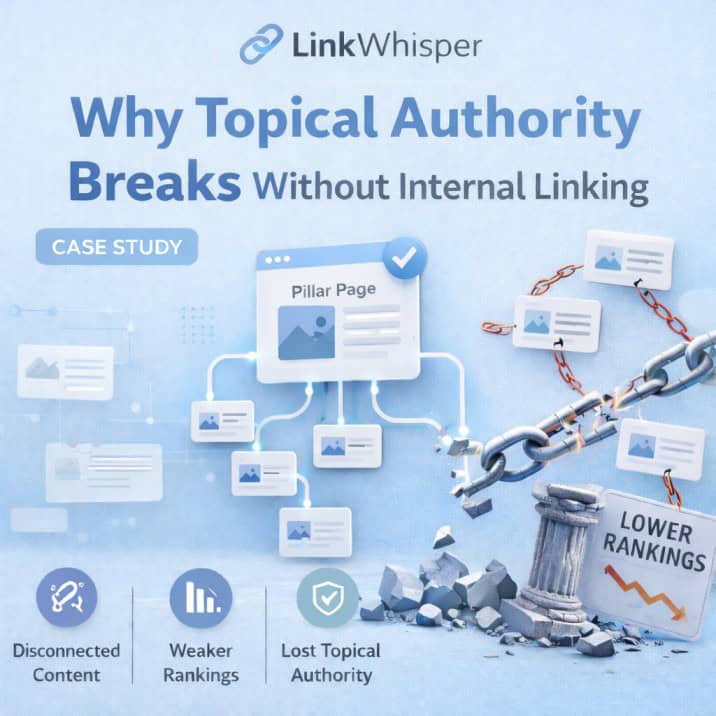
As content volume increases, internal linking becomes more complex. Without deliberate planning, link authority becomes concentrated, and page depth increases. The site began to resemble a tree with a few thick branches and many isolated twigs.
The strategic goal of the audit was to restructure internal linking so that link juice could flow naturally to underperforming pages and deeper content.
Why an Internal Link Audit Was Necessary
Confirming the Root Cause
An internal link audit was necessary because the site’s performance issues were not caused by external factors. The backlink profile was strong, the technical setup was solid, and the content quality was high.
The missing piece was a system to distribute internal link authority effectively.
What the Audit Revealed
A thorough internal link audit looked at the gardening website as a connected ecosystem rather than a collection of separate articles. It examined how authority flowed from popular planting guides to related content on soil health, pest control, and seasonal care.
The review uncovered several overlooked issues. Some valuable garden articles were isolated. Others were buried deep within the site and received minimal internal support. In many cases, anchor text lacked clarity and did not reinforce key gardening themes. This audit provided clarity. It revealed why high-potential gardening pages. Despite being well-written and relevant, they were not gaining the rankings they deserved.
Impact of Poor Internal Linking
Link Whisper’s Take on the Whys of Wrong Internal Linking Patterns
The impact of weak internal linking on a gardening website is often subtle but significant. It rarely appears as a sudden drop in traffic. Instead, it shows up as stagnant rankings, limited visibility for new garden guides, and inconsistent organic growth.
In this case, a few well-established posts continued to perform strongly. However, newly published content on seasonal planting, pest management, and soil improvement failed to gain traction. Over time, this imbalance restricted the site’s overall growth and topical authority.
Low link equity in top gardening posts
The “Tomato Growing Guide” has become the top performing page, receiving most internal links. But related pages like “Tomato Diseases” and “Best Tomato Varieties for Zone 6” were left without support. This created an imbalance, making it hard for the entire gardening cluster to rank.
Seasonal garden pages stayed invisible in SERPs
Seasonal guides like “Fall Planting Guide” and “Spring Planting Calendar” were good but didn’t rank. Because they lacked internal links and search engines didn’t treat them as important. As a result, the site missed traffic during peak gardening seasons
Gardening topic clusters felt disconnected
Topics like composting, lawn care, and pest control were not linked together properly. This made it difficult for users to explore related topics. It also made it harder for the search engines to understand the site’s theme. The site lacked the sense of a unified gardening resource.
The Problem of Crawl Depth and Hidden Pages
One of the most significant impacts was crawl depth. It refers to how many clicks it takes to reach a page from the homepage. Pages buried deep in crawl depth receive less frequent crawling and less link equity. In this case, important content was often more than three clicks away from the homepage.
Deep garden guides lacked visibility
Guides such as “Compost Troubleshooting” and “Mulching Tips for Hot Summers” were buried deep in the site structure. Search engines crawled them less often. This delayed indexing and reduced their chances of ranking for relevant searches.
Pages buried beyond three clicks lost link equity
When pages are too far from the homepage, they receive fewer internal links. This means they struggle to rank, even if the content is excellent. Many gardening posts fell into this category, limiting the site’s growth.
Finding Buried Garden Content with Link Whisper
Link Whisper helped identify pages that were almost invisible due to low internal links. By adding links from high-authority posts, the site brought these pages closer to the surface, improving crawl frequency and visibility.
The Organizational Impact
Another impact was internal workflow. The site’s editorial team was unaware of the internal link issues. The internal linking was not a part of their publishing process. Content was being created without internal link plans, and link opportunities were missed. The audit revealed that internal linking needed to become part of the content process. Without that change, the site would continue to struggle, even with new content.
Link equity trapped in top posts
The “Tomato Growing Guide” received most internal links, while related pages like “Tomato Diseases” were left without support. As a result, link equity remained concentrated, and the gardening topic cluster couldn’t grow as a whole.
Seasonal guides remained unseen
Seasonal posts like “Spring Planting Calendar” and “Fall Planting Guide” had strong engagement but lacked internal links. Search engines couldn’t easily find them.It caused missed traffic during peak gardening months.
How Link Whisper Guided the Internal Linking
Strategic Internal Link Audit Framework
The internal link audit followed a structured approach to identify link gaps, reduce crawl depth, and strengthen thematic clusters using internal linking.
Internal Link Audit for Seasonal Gardening Content
Linkwhisper scanned the site, highlighting orphan pages and low-link posts. Seasonal guides like “Spring Planting Calendar” were buried deep and not receiving link equity, explaining why they failed to rank despite strong content quality.
Internal Link Audit to Uncover Orphan Pages
The audit revealed many pages with no internal links pointing to them, especially seasonal and regional guides. These pages were invisible to search engines, showing the need for a strategic internal linking plan to improve discoverability.
Internal Link Audit for Topic Cluster Alignment
Topic clusters such as composting, pest control, and lawn care lacked cohesion. The audit identified gaps between related posts. It enabled a plan to connect them through strategic internal links and improve topical authority.
Building a Link Equity Distribution Plan
Once the audit was done, a strategic plan was developed to distribute link equity. The plan prioritized pages based on three criteria: content value, ranking potential, and strategic importance
Link Equity Distribution Plan for High-Value Garden Pages
Pages were prioritized based on value, ranking potential, and strategic importance. High-authority posts like “Best Perennials for Zone 6” were used to pass link equity to deeper content like “Perennial Care in Winter,” boosting relevance across the site.
Internal Linking Tool to support low-ranking posts
Using Link Whisper, the team identified the best anchor text and link paths. This ensured underperforming pages gained support from authoritative posts. It also improved their chances of ranking for competitive long-tail queries.
Link Equity Strategy for Seasonal Planting Guides
Seasonal guides were connected to cornerstone content, enabling link equity to flow naturally. This helped the site rank for seasonal searches like “fall planting guide” and improved visibility during peak gardening months.
Addressing Crawl Depth Through Strategic Linking
Reducing crawl depth required deliberate linking from high-authority pages to deeper content. The audit identified pages that were buried in the site’s structure and created internal links that brought them closer to the homepage.
Reduce Crawl Depth for Deep Garden Guides
Important pages were often buried more than three clicks from the homepage. Strategic internal linking reduced crawl depth by connecting high-authority posts to deeper content. It improved the crawl frequency and indexation.
Crawl Depth Optimization using Internal Linking Tool
Link Whisper revealed which pages were hidden due to excessive crawl depth. By adding links from top-level pages, the site improved accessibility for search engines and increased the likelihood of deeper content ranking.
Improve Crawl Depth for Seasonal Garden Tutorials
Pages like “Organic Pest Control for American Gardens” were previously hidden. Strategic internal links made them easier to reach, helping search engines crawl them more frequently. It also boosted visibility for high-intent gardening queries.
Optimizing Anchor Text for Relevance and Context
Anchor text is a critical component of internal linking. It tells search engines what the target page is about and provides semantic context. The audit revealed that many internal links used generic anchor text, which offered limited value.
Anchor text was improved to provide better context and relevance, replacing generic phrases with descriptive anchors.
Optimized Anchor Text for Composting Guides
Generic anchors like “read more” were replaced with targeted phrases like “best composting methods for beginners.” This improved context and helped search engines understand the relationship between composting pages.
Improved Link Relevance for Pest Control Pages
Anchor text was updated to match specific gardening intent, such as “organic aphid control tips.” This strengthened internal link value and boosted relevance for pest-related clusters.It also helped readers quickly identify the content they need, improving engagement and reducing bounce rate.
Descriptive Anchors for Seasonal Planting Content
Seasonal guides used descriptive anchors like “fall vegetable planting schedule.” This helped users navigate and improved search engine understanding of topic clusters. It also made it easier for users to jump from general pest posts to specific solutions.
Implementing a Sustainable Internal Linking Strategy
The final part of the solution was to establish a sustainable internal linking process. This ensured that the internal linking system remained effective as the site grew.
Sustainable Internal Linking Strategy for Growing Websites
A publishing workflow was created where every new post received internal links from high-authority pages. This ensured consistent link equity distribution and prevented new content from becoming isolated as the site expanded.
Internal Linking Tool Workflow for Ongoing Content Growth
Existing content was reviewed periodically to update links and anchor text. Link Whisper made this process efficient, helping maintain link health and prevent older pages from becoming orphaned.
Internal Link Audit Process for Long-Term SEO Stability
Internal linking became part of the editorial workflow.This ensured the site maintained strong topical clusters. It improved crawl depth and continued distributing link equity across the growing gardening site.
The Results of the Internal Link Audit
Measurable Improvements in Organic Performance
Within two months of completing the internal link audit, the site saw a 32% increase in organic traffic. Overall impressions grew by 27%. More than 18 previously underlinked pages moved into the top 10 results and the crawl depth improved by 22%. The impact was visible across multiple pages and topic clusters.
Internal Link Audit results for Improved Organic Traffic
Previously hidden pages began ranking for long-tail keywords like “winter vegetable gardening.” Organic visibility increased across multiple topics, proving that internal link equity was now being distributed effectively.
Internal Link Audit for Better Ranking of Gardening Pages
Underperforming pages began gaining visibility in search results after the internal linking improvements were implemented. This led to measurable growth in impressions and clicks across the USA, without publishing additional content.
Link Equity Improvement through Internal Linking Strategy
Pages such as “Natural Aphid Control” entered the top 10 results. This demonstrated the impact of internal link equity distribution across the entire site and the broader USA gardening audience.
Improved Crawl Efficiency and Content Discoverability
The audit improved crawl depth and made previously hidden pages more discoverable.
Improve Crawl Efficiency with Internal Link Audit
Search engines began crawling deeper pages more frequently, improving indexing and visibility for previously hidden content. This increase in crawl activity ensured that important gardening guides were discovered faster and ranked more consistently in relevant search results.
Crawl Depth Improvement for Better Indexing
Pages that were previously buried became more accessible and were indexed more quickly. This improved discoverability for key gardening topics. It also allowed high-potential articles to compete more effectively in search results.
Internal Linking Tool for Crawl Depth Improvement
Link Whisper helped identify pages that needed additional link support. This improved crawl depth and ensured that important content became more visible for the USA audience.
Stronger Content Clusters and Topical Authority
The internal link assessment strengthened topic clusters and improved the site’s overall topical authority.
Build Content Clusters through Internal Linking
Related posts were connected through contextual links, improving topical structure. This helped search engines better understand the site’s themes and improved rankings. It also enhanced user navigation, encouraging readers to explore more content. This increased engagement across the site.
Topical Authority through Internal Link Audit
The site’s hierarchy became clearer as related pages were linked properly. This improved topical authority and ranking stability. As a result, users and search engines could more easily follow content pathways, strengthening the overall SEO structure.
Internal Link Audit for Better Topic Relevance
The audit created a strong internal linking framework, improving how content supported each other. Composting, pest control, and seasonal planting guides were linked together. This made gardening content easier to navigate and boosted overall SEO performance.
Long-Term Structural and Strategic Gains
The site transitioned from a fragmented set of pages into a cohesive content system supported by internal linking.
Long-Term Benefits of Internal Link Audit
Link authority continued to flow effectively, supporting future gardening content growth. The site became more resilient and scalable, allowing new plant guides and seasonal tips to rank more easily over time.
Scalable Internal Linking Strategy for Publishers
The internal linking system remained effective as new gardening posts were added. This ensured ongoing growth without constant manual effort. It also helped new plant guides gain visibility faster by receiving internal link support from established content.
Effective Internal Linking Plan for Content Sites
The internal link audit created a framework for continuous growth. It improved performance without relying on new backlinks or constant content production. This allowed existing gardening guides to gain traction more quickly.
Conclusion
This case study proves that an internal link audit can be a pivotal factor. Even with great content and strong backlinks, a website can struggle if internal links are scattered and inconsistent. In this gardening site, valuable pages were getting buried in crawl depth, and link authority was stuck on a few top posts.
The audit by Link Whisper showed that the site’s stagnating growth was not caused by content quality or external factors. The problem was structural, and the solution was a strategic internal linking system. Once the internal linking issues were addressed, organic traffic increased by 32% within two months. Multiple pages entered the top 10 results, and crawl depth improved by 22%. Internal linking is a foundational SEO component. When it is treated strategically, it can transform a site’s performance without requiring new content or additional backlinks.
Frequently Asked Questions
How can poor internal linking cause a gardening site to stop growing organically?
Poor internal linking can isolate new pages, preventing search engines from finding them quickly. As a result, only a few high-performing posts receive most of the link equity, while new or deep content remains hidden. Over time, organic growth stagnates despite strong backlinks and consistent publishing.
Why do some gardening articles rank while others remain invisible despite strong backlinks?
When internal links are not strategically distributed, link authority becomes concentrated in a few pages. Even high-quality articles like seasonal guides or how-to posts may not rank because they receive little internal support. Backlinks alone cannot compensate for weak internal linking.
What does crawl depth mean, and how does it affect gardening content visibility?
Crawl depth refers to how many clicks it takes for a page to be reached from the homepage. Pages buried deep receive less frequent crawling and less link equity.
How can an internal link audit reveal orphan pages in a gardening website?
An internal link audit identifies pages with no internal links pointing to them. These orphan pages are effectively invisible to search engines and users. In a gardening site, orphan pages often include seasonal guides or regional planting advice that never gain visibility.
How can Link Whisper help with internal linking?
Link Whisper provides automated internal link suggestions, link distribution, and identifies orphan pages. It helps streamline the audit process and supports strategic internal linking without manual effort.
What is a link equity distribution plan?
A link equity distribution plan is a strategic framework that determines which pages should pass authority and which pages need more internal support. It prioritizes pages based on value, ranking potential, and strategic importance.
What role does anchor text play in internal linking for gardening articles?
Anchor text provides context for linked pages. Using descriptive phrases like “best composting methods for beginners” strengthens relevance signals. This helps search engines understand the topic relationship and improves user experience by making links meaningful.
What is an Internal link assessment and how often should it be performed?
An Internal link assessment evaluates the site’s internal linking structure. It identifies opportunities to improve link authority distribution and crawlability. It is recommended to perform an audit at least once every 6–12 months or whenever the site experiences significant content growth.
What steps should a gardening website take to maintain internal linking as it grows?
The team should integrate internal linking into the publishing workflow. New posts should receive links from high-authority pages, and existing content should be reviewed periodically. This ensures link equity continues to flow and prevents future content from becoming isolated.
Check if your site has the same issues.
Run a free audit right now. See your orphaned pages, broken links, and link health score in 60 seconds.
Check My Site