Contents
- 1 Introduction
- 2 Client Background: Understanding the WordPress Nutrition Website
- 3 The Problem : Orphan Pages SEO Limiting Growth
- 4 The Impact : How Orphan Pages SEO Affected the Nutrition Website
- 5 Leveraging Link Whisper : Solving Orphan Pages SEO
- 6 Results Achieved Through Internal Linking
- 7 Key Takeaways From Fixing Orphan Pages SEO
- 8 Conclusion
- 9 Frequently Asked Questions
- 9.1 What are orphan pages SEO and why are they important?
- 9.2 How can addressing orphan pages SEO improve website traffic?
- 9.3 How does Link Whisper assist with internal linking?
- 9.4 What is WordPress internal linking, and why does it matter?
- 9.5 How does internal links SEO WordPress strengthen content clusters?
- 9.6 Can internal linking reduce crawl depth?
- 9.7 How quickly can orphan pages show measurable SEO results?
- 9.8 How does anchor text optimization enhance internal linking effectiveness?
- 9.9 How does embedding internal linking into editorial workflows support long-term SEO?
- 9.10 Is creating new content necessary to fix orphan pages?
Introduction
High-quality content is often seen as the key to organic growth. But what happens when even your best work goes unnoticed?
Our client, a WordPress nutrition website, had invested years building a comprehensive library of articles. These posts covered a wide range of topics, from “Micronutrient Deficiency Symptoms” to “Plant-Based Protein Benefits.” Each post was meticulously researched, full of expert insights, and optimized with SEO best practices. Backlinks from reputable sources added to the promise of strong organic traffic.
Despite all this effort, something wasn’t working. A handful of cornerstone guides attracted consistent visitors. Meanwhile, dozens of other valuable articles remained hidden essentially invisible to both users and search engines. Traffic wasn’t flowing to the content that deserved it most, and the site’s potential for growth was being quietly stifled.
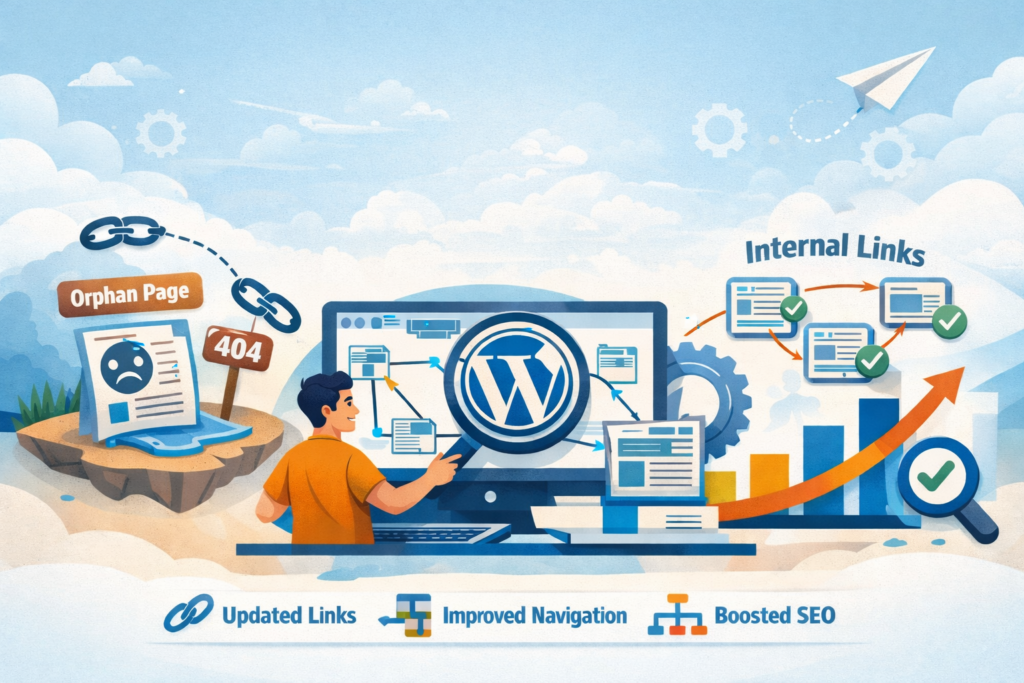
The issue wasn’t poor content. It was a structural SEO problem known as orphan pages. These are pages that exist on the site but have no internal links pointing to them. Without connections from other pages, these posts were buried, often several clicks deep, and effectively invisible in search results.
Client Background: Understanding the WordPress Nutrition Website
The client’s website had grown organically over several years, building a substantial content library. It included hundreds of posts covering nutrition topics such as vitamins, minerals, meal planning, weight management, and supplementation strategies.
WordPress Internal Linking Gaps in the Client’s Content Architecture
High-performing cornerstone guides like “The Ultimate Guide to Vitamins” and “Meal Planning for Weight Loss” naturally attracted multiple internal links. Meanwhile, many smaller, niche articles such as “Magnesium and Energy Metabolism” and “Plant-Based Protein Benefits” remained isolated.
The editorial team focused heavily on content creation but lacked a structured approach to internal links SEO WordPress. As a result, orphan pages became increasingly common, with many articles buried three or more clicks deep. These pages were difficult for search engines to index and challenging for users to discover organically.
Editorial Workflow Challenges Contributing to Orphan Pages
New posts were often published in isolation, without linking to existing content. Over time, this led to a fragmented content structure, where valuable posts remained disconnected from the site’s hub articles. This scenario is common on content-rich WordPress sites and illustrates why a lack of structured internal linking can undermine SEO efforts.
The Problem : Orphan Pages SEO Limiting Growth
Orphan pages seo had a direct impact on the site’s visibility, engagement, and authority. Despite having a large content library, most high-value pages were unseen.
WordPress Internal Linking Challenges Preventing Page Discovery
Articles like “Micronutrient Deficiency Symptoms” contained detailed insights on vitamin and mineral deficiencies. However, they were never linked from broader guides, leaving them effectively hidden from both users and search engines. Similarly, “Plant-Based Protein Benefits” remained unlinked from cornerstone protein and meal planning content.
Without proper internal linking, search engines struggled to recognize the relevance of these pages. As a result, many posts remained low in search rankings or were unindexed entirely. Users exploring the website were equally unlikely to discover these orphaned posts.
Internal Links SEO WordPress Issues Affecting Crawl Depth
Crawl depth further exacerbated the problem. Pages like “Omega-3 and Heart Health” were buried under multiple categories. It made them difficult for search engines to reach efficiently.
High-performing pages, like “Ultimate Guide to Vitamins,” accumulated most of the site’s internal link authority. Meanwhile, orphaned pages remained powerless, receiving little to no link support. Without a strategy for internal links SEO, the majority of the site’s content remained structurally disconnected. It resulted in reduced user engagement and organic visibility.
The Impact : How Orphan Pages SEO Affected the Nutrition Website
Orphan pages seo created tangible consequences for the client’s site performance. They limited organic traffic growth and reduced user engagement. It also prevented valuable content from contributing to the site’s overall authority.
Internal Linking Gaps Reducing Organic Visibility
Because of missing internal links, highly valuable articles went unnoticed. “Magnesium and Energy Production” provided insights into energy metabolism. However, it had no inbound links, leaving the page invisible to search engines. “Micronutrient Deficiency Symptoms” remained buried under multiple category layers. As a result, it never ranked for targeted long-tail queries like “vitamin deficiency signs” or “micronutrient deficiency effects.”
The absence of structured internal linking limited organic traffic, even for content that should have performed well.
Internal Links SEO WordPress Issues Weakening Topical Authority
Disconnected content also impacted the site’s authority in the nutrition space. Articles that could have formed strong content clusters covering vitamins, minerals, and diet strategies remained isolated.
For example, separate posts on “Vitamin D Deficiency Symptoms” and “Vitamin D and Immune Support” existed independently. They were never linked to each other, preventing search engines from recognizing them as related content. This fragmentation lowered the site’s ability to rank for long-tail keywords like “vitamin D immune support” or “prevent vitamin D deficiency.”
User Experience Implications From Orphan Pages
Orphan pages also affected the visitor experience.Users landing on high-traffic guides, such as “Meal Planning for Weight Loss,” often left the site quickly. They rarely discovered related articles like “Plant-Based Protein Benefits” or “Magnesium and Energy Production.” Low session duration and fewer page views were direct consequences of weak internal links SEO practices.
Leveraging Link Whisper : Solving Orphan Pages SEO
Link Whisper handled the site’s orphan pages seo by scanning the content library. It identified underlinked posts, and automatically suggested strategic internal links. This allowed previously hidden articles to be connected to relevant hub pages, improving both user navigation and search engine visibility.
Conducting an Internal Linking Audit With Link Whisper
Link Whisper began by performing a comprehensive audit of the client’s site. It scanned hundreds of nutrition articles and identified orphan pages as well as underlinked content. Posts such as “Plant-Based Protein Benefits,” “Magnesium and Energy Production,” and “Omega-3 and Heart Health” were flagged as needing internal links to improve visibility.
Next, content clusters were analysed by nutrition topics. This step identified high-authority hub pages capable of passing link equity to these orphaned articles. This process created a clear roadmap for restoring the discoverability of orphaned content. It also strengthened the site’s overall structure and improved internal links to SEO WordPress across the website.
Building an Internal Links SEO WordPress Strategy
Once orphan pages were identified, Linkwhisper implemented a structured internal linking plan. Hub pages linked to isolated posts using descriptive anchor text to enhance both user clarity and SEO.
For instance, “Vitamin D Absorption Factors” was linked from the “Immune System Support Guide.” At the same time, “Plant-Based Protein Benefits” was connected to cornerstone guides on protein intake and meal planning. These links reintegrated orphaned content into the site’s structure, creating stronger content clusters and reinforcing topical authority.
Reducing Crawl Depth Through Internal Linking
Many orphan pages were buried deep within the site, requiring multiple clicks to reach. By linking these posts from hub content, crawl depth was reduced. It also improved search engine accessibility. For example, “Omega-3 and Heart Health” was originally three clicks away from the homepage. By reducing it to just one click, the page’s chances of being indexed and ranking for relevant queries significantly increased.
Integrating Internal Linking Into Editorial Workflows
To prevent new orphan pages, internal linking was embedded into the editorial workflow. Writers were trained to link new content to existing articles naturally. Editors reviewed anchor text for clarity, ensuring every post contributed to internal links SEO WordPress.
With this approach, every new article was automatically connected to related content within the site. This not only minimized the creation of orphan pages but also helped maintain consistent SEO growth over the long term.
Results Achieved Through Internal Linking
Increased Visibility for Previously Hidden Pages
Orphaned articles like “Micronutrient Deficiency Symptoms,” “Plant-Based Protein Benefits,” and “Magnesium and Energy Production” were linked to relevant hub pages. This made them easier for search engines to discover and index. Within weeks, they started ranking for long-tail nutrition keywords that had previously gone untapped.
Organic impressions increased by 68% as a result of the improved internal linking strategy. This demonstrates how strategic internal linking in WordPress can dramatically improve content discoverability. Organic clicks also grew by 52%, highlighting the positive impact of stronger internal connections on overall search performance.
Improved Crawl Efficiency and Indexation
Reducing crawl depth through targeted internal links allowed search engines to access important content more efficiently. Pages that had previously been buried three or more clicks from the homepage were now reachable in just one or two clicks.
This change led to a 35% faster indexing rate and improved ranking potential for deeper content, ensuring that even smaller, niche articles contributed to overall SEO performance.
Enhanced User Engagement Through Connected Content
With previously orphaned pages now linked to related content, visitors could explore the site more intuitively. Users spent more time reading multiple articles per session, which increased average session duration by 28% and pages per visit by 22%.
This improvement showed that internal linking benefits search engines by strengthening the site’s structure and improving content visibility. It also enhances the user experience by guiding readers to valuable and relevant content across the website.
Strengthened Content Clusters and Topical Authority
Linking related nutrition content allowed high-authority hub pages to pass link equity to orphaned posts. Vitamin, mineral, and dietary strategy articles were now interconnected, forming coherent content clusters.
Search engines were able to better interpret the site’s structure, and overall topical authority in the nutrition domain increased. Key cluster pages saw a 15–25% boost in keyword rankings, reflecting the power of well-planned internal linking for long-term SEO growth.
Ensuring SEO Growth
Integrating internal linking into the editorial workflow changed how new content was published. This approach minimized the risk of creating new orphan pages, ensuring that link equity flowed naturally throughout the site.
As a result, the website experienced consistent organic growth. New posts contributed to a 42% increase in indexed pages within three months. Average organic traffic rose by 37%, indicating improved search visibility and reach. Session duration also improved by 25%, showing that users were engaging with more content on the site.
Key Takeaways From Fixing Orphan Pages SEO
Orphan Pages SEO Can Hide Valuable Content
Even websites with extensive content libraries can have orphan pages. These disconnected pages remain invisible to both users and search engines, limiting the site’s full SEO potential. Addressing orphan pages seo can unlock hidden organic traffic without the need to create additional content.
WordPress Internal Linking Distributes Authority
Structured internal linking allows high-authority hub pages to pass link equity to previously orphaned content. This not only improves search rankings but also guides visitors to related, valuable articles, enhancing the user experience.
Internal Links SEO WordPress Strengthens Content Clusters
Implementing descriptive and contextually relevant anchor text while reducing crawl depth reinforces content clusters. This approach helps search engines understand the site’s structure and establishes stronger topical authority across related posts.
Internal Linking Workflows Drive SEO Success
Embedding internal linking into the editorial workflow ensures new content is automatically connected to the site’s hub pages. This prevents future orphan pages and maintains SEO success supporting ongoing discoverability and traffic.
Conclusion
By addressing orphan pages SEO, the client transformed a fragmented nutrition website into a fully connected, high-performing resource. Using Link Whisper, the team conducted thorough content audits, implemented strategic WordPress internal linking, and optimized anchor text. Previously hidden pages were discovered and became authoritative within the site’s content ecosystem.
The results were immediate and measurable. Organic traffic increased as search engines indexed more pages. Users explored related articles more easily, boosting engagement and session duration. Content clusters became stronger, reinforcing the site’s topical authority.
With properly structured internal links SEO WordPress, every page contributes to the site’s overall visibility. This includes not just the top-performing posts, but all content across the website. Integrating internal linking into the editorial workflow ensures continued SEO growth, making the website more discoverable and competitive in the nutrition space.
Frequently Asked Questions
How can addressing orphan pages SEO improve website traffic?
Linking orphan pages allows search engines to discover and index them more efficiently. This increases visibility, boosts organic impressions, and helps previously hidden pages rank for long-tail keywords.
How does Link Whisper assist with internal linking?
Link Whisper streamlines the internal linking process by identifying orphaned pages, suggesting relevant links, and optimizing anchor text. This enables websites to connect hidden content without manual editing of numerous posts.
What is WordPress internal linking, and why does it matter?
WordPress internal linking involves connecting one page or post to another within the same website. Effective internal linking improves crawl efficiency, distributes link authority. It also strengthens content clusters, and guides users to related content.
How does internal links SEO WordPress strengthen content clusters?
Proper internal linking ensures related pages are interconnected. This helps search engines understand the site’s topical authority and enhances rankings for niche topics within the website.
Can internal linking reduce crawl depth?
Yes. By linking deep or previously orphaned pages to hub content, the number of clicks needed to reach them from the homepage decreases. This allows search engines to crawl and index important pages more frequently.
How quickly can orphan pages show measurable SEO results?
After implementing structured internal linking, previously orphaned pages can begin ranking for targeted long-tail keywords within weeks. Increased impressions, clicks, and user engagement typically follow in the subsequent months.
How does anchor text optimization enhance internal linking effectiveness?
Descriptive and contextually relevant anchor text helps search engines and users understand the linked content. This improves click-through rates and strengthens SEO signals for the target page.
How does embedding internal linking into editorial workflows support long-term SEO?
Integrating internal linking into content creation ensures new pages are automatically connected to hub pages. This prevents orphan pages from forming and maintains consistent organic growth over time.
Is creating new content necessary to fix orphan pages?
No. Properly structured internal linking can bring existing orphaned pages into visibility without publishing additional content. Connecting content strategically allows hidden pages to gain traffic and authority.
Check if your site has the same issues.
Run a free audit right now. See your orphaned pages, broken links, and link health score in 60 seconds.
Check My Site