Contents
- 1 Case Overview: Why the Website Struggled With Indexation
- 2 Impact: How Crawl Depth Hurts Indexation and Visibility
- 3 Solution Offered by Link Whisper
- 3.1 Rebuilding Website Architecture Around Topic Clusters SEO
- 3.2 Pillar Content Became the Center of Topic Clusters SEO
- 3.3 Better Internal Linking Reduced Crawl Depth
- 3.4 LinkWhisper Tool Improved Topic Clusters SEO Scalability
- 3.5 How the LinkWhisper plugin Simplified Internal Linking
- 3.6 LinkWhisper for WordPress Improved Crawl Accessibility
- 4 Results Achieved After Improving Crawl Depth
- 5 Conclusion
- 6 Frequently Asked Questions
- 6.1 What is topic clusters SEO and why is it important?
- 6.2 How does topic clusters SEO improve topical authority?
- 6.3 What role did crawl depth play in this SEO case study?
- 6.4 How did internal linking improve indexation?
- 6.5 What is pillar content in topic clusters SEO?
- 6.6 How did LinkWhisper for WordPress help improve SEO performance?
- 6.7 What is the LinkWhisper Tool used for?
- 6.8 How did the linkwhisper plugin reduce crawl depth issues?
- 6.9 What was the impact on organic traffic after implementing topic clusters SEO?
- 6.10 Can topic clusters SEO improve long-term SEO performance?
Topic clusters SEO is often the difference between steady growth and stalled performance. A SaaS company in this case was publishing strong content consistently, but organic visibility started to drop as the site expanded.
Search engines could no longer clearly understand how pages were connected. Important content was buried deep, and internal linking became inconsistent.
The issue wasn’t content quality. It was structure and crawl clarity.
The team used Link Whisper to rebuild the internal linking system with a structured topic clusters SEO approach. With the LinkWhisper Tool and contextual linking, they strengthened topical authority and organized the site into a clear ecosystem.
The focus was on reducing crawl depth, improving internal link flow, and strengthening semantic relationships between pages. Using LinkWhisper for WordPress, they built a scalable linking structure that improved search engine understanding.
Within a few months, the site saw major gains in indexation, crawl efficiency, organic traffic, and rankings, shifting from a scattered content library to a structured, authority-driven system.
Case Overview: Why the Website Struggled With Indexation
Challenges That Limited Organic Growth
The client was a mid-sized B2B SaaS company operating in a highly competitive digital marketing niche. Organic search traffic played a major role in lead generation, which made SEO performance critical for business growth. Over time, the company built a large content library. It contained more than 450 blogs, tutorials, landing pages, and educational resources.
Although the content team consistently published high-quality material, the website lacked a clear topic clusters SEO structure. Pages were added independently without strategic connections between related topics. As the website expanded, crawl inefficiencies increased and search visibility began to decline. Many high-value articles remained buried under outdated categories. This made it difficult for search engines to understand the hierarchy of information.
The team initially believed publishing more articles would naturally improve rankings. Instead, they experienced stagnant traffic growth, declining crawl activity, and lower-than-expected indexation rates. Their existing content strategy focused heavily on quantity but overlooked the importance of semantic organization and internal authority flow.
Poor Website Structure Reduced Crawl Efficiency and Indexation
A detailed SEO audit revealed that many important pages were buried deep within the website hierarchy. Several commercial pages and educational resources required five or more clicks from the homepage. This made them difficult for search engines to discover efficiently. This also created major crawl inefficiencies that weakened overall indexation.
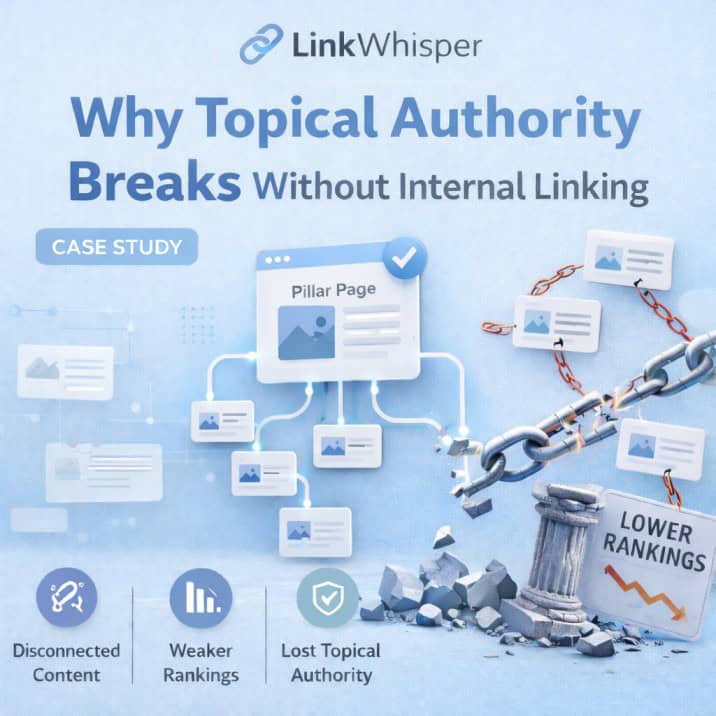
Without a scalable topic clusters SEO structure, the content remained fragmented across multiple categories. Search engines could not identify clear topical pathways between related resources, which reduced the visibility of important pages.
The audit also revealed several technical and structural issues affecting SEO performance. Important pages received minimal internal authority, contextual links between articles were inconsistent, and multiple orphan pages had no supporting internal links. Existing pillar content pages also lacked proper cluster support. This reduced their effectiveness as authority hubs.
Weak Internal Linking Reduced Topical Authority
One of the biggest issues was the inconsistent internal linking strategy. Writers occasionally linked to older blogs manually. There was no standardized process supporting topic clusters SEO, or semantic relevance. Internal links were added randomly rather than strategically. This limited the website’s ability to build strong contextual relationships.
The site contained several long-form guides that could have functioned as authoritative cornerstone content. They lacked supporting links from related articles. Instead of reinforcing one another, pages competed independently for visibility. Search engines viewed the site as a scattered collection of articles rather than a structured educational ecosystem.
This fragmented structure weakened overall topical authority. Google struggled to identify expertise signals due to poor content structure.
Excessive Crawl Depth Reduced Search Visibility
The excessive crawl depth also impacted crawl frequency and page discovery. Search engines allocated less crawl attention to pages buried deeper within the site structure. This caused delayed indexing and inconsistent rankings across the content library.
Several recently published articles remained unindexed for weeks despite targeting high-intent keywords. The deeper pages became, the less likely they were to receive meaningful crawl activity. This reduced the effectiveness of the company’s publishing strategy and prevented valuable content from reaching its full ranking potential.
The client needed a scalable way to strengthen internal linking, reduce crawl depth, and improve overall topic clusters SEO performance.
Impact: How Crawl Depth Hurts Indexation and Visibility
Poor Crawl Accessibility Hurt SEO Performance
Search engines rely on efficient crawl pathways to discover and prioritize content. When important pages are buried too deeply, they often receive less crawl attention. This reduced indexation frequency and ranking potential over time. This also became one of the biggest barriers limiting the client’s SEO growth.
For this client, poor crawl accessibility weakened the effectiveness of their topic clusters SEO strategy. It is because search engines struggled to understand how pages connected semantically. The deeper the pages became, the more disconnected the website appeared from a structural standpoint.
Deep Pages Received Less Crawl Attention
The SEO audit showed that nearly 40% of the website’s URLs required at least five clicks to access. Several commercial pages and blog posts had very few contextual links pointing toward them. Search crawlers frequently stopped before reaching deeper resources, leaving important pages under-indexed.
This negatively impacted overall SEO performance in several ways. Page indexation slowed down, keyword visibility declined, and authority distribution across the website became uneven. Since internal authority was concentrated around a small group of pages, newer and deeper resources struggled to gain traction.
The inefficient structure also wasted crawl budget. Instead of prioritizing high-value pages, search engines spent excessive time navigating weak category pathways and disconnected archives.
Weak Topic Clusters SEO Reduced Semantic Relevance
A successful topic clusters SEO strategy depends heavily on semantic organization. Search engines need clear relationships between broad subject pages and supporting resources to understand expertise and relevance.
However, the client’s content ecosystem lacked structured clusters. Related topics existed across the website, but pages rarely linked together contextually. As a result, search engines could not easily interpret which pages were most important within each subject category.
This weakened semantic relevance and limited the growth of the site’s topical authority. Instead of appearing as a trusted resource within focused topic areas, the website appeared fragmented and difficult to categorize.
Pillar Content Failed to Support Supporting Articles
The company had already created several long-form guides targeting broad industry topics. However, these pages were not functioning effectively as cornerstone content hubs. They lacked strong internal pathways to supporting resources.
Many supporting blogs existed independently without linking back to broader educational guides. This reduced the authority potential of the pillar content pages while also limiting user engagement and crawl efficiency.
Without strategic internal linking, the website could not fully leverage its educational content to build semantic depth.
Orphan Pages Became Invisible to Search Engines
The audit also uncovered dozens of orphan pages with no internal links. Although these pages contained useful information, they were practically invisible from a crawl perspective. This is because search engines had no contextual pathways leading toward them.
Using the Link Whisper Internal Linking plugin, the SEO team identified opportunities to integrate orphan pages into stronger topic clusters SEO structures. This became a critical part of improving crawl accessibility and indexation.
Solution Offered by Link Whisper
Rebuilding Website Architecture Around Topic Clusters SEO
The first stage of the campaign focused on restructuring the website around a scalable topic clusters SEO model using the LinkWhisper plugin. Instead of treating articles separately, the SEO team grouped content into structured topic-based clusters.
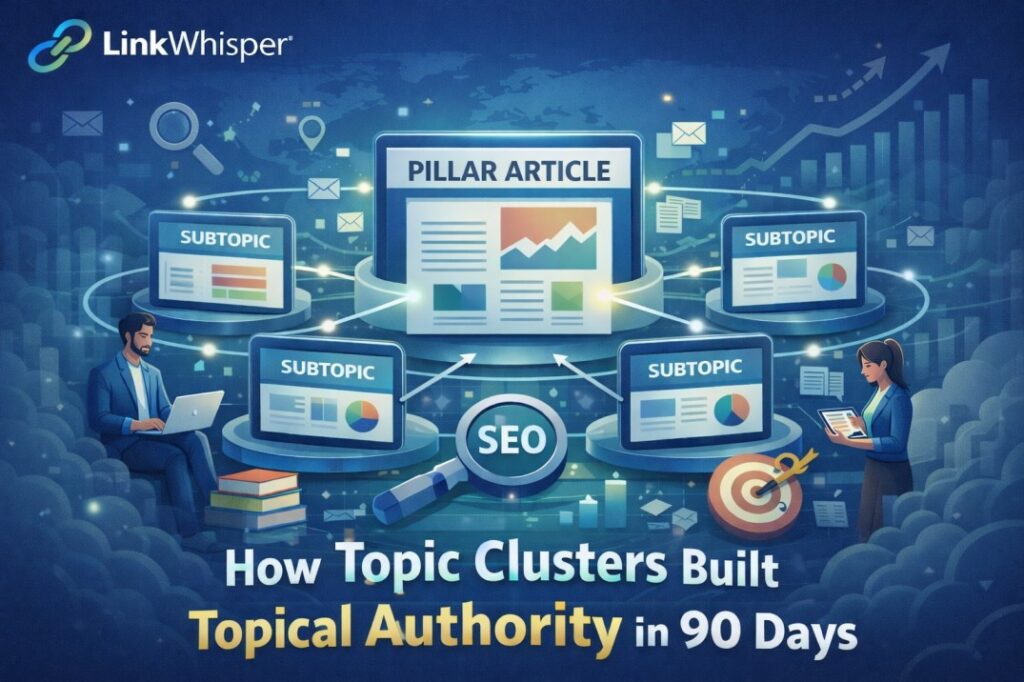
Each cluster contained a central pillar content hub supported by related educational resources, tutorials, and blog articles. These pages were connected strategically using contextual internal links generated and optimized through the LinkWhisper plugin.
This new structure improved both crawl accessibility and content hierarchy. Search engines could now identify the relationship between broad topic pages and supporting resources much more clearly.
Pillar Content Became the Center of Topic Clusters SEO
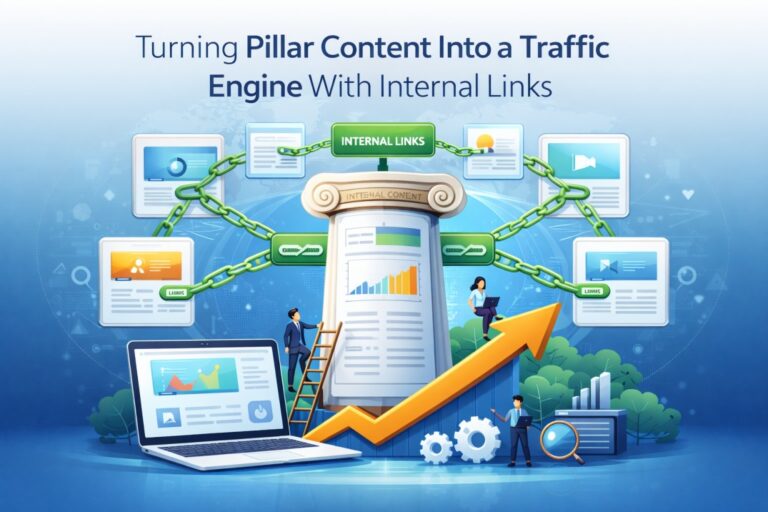
The SEO team expanded several existing guides into stronger pillar content assets covering broad topics in greater depth. These pages became authoritative hubs linking to related tutorials, case studies, and supporting resources throughout the website.
The improved cornerstone content structure helped search engines recognize which pages represented core authority sources within each content category. This also improved user navigation by making it easier for visitors to discover related information naturally.
As supporting pages linked back to main guides, semantic relevance and internal authority flow improved.
Better Internal Linking Reduced Crawl Depth
The team reorganized navigation pathways and strategically added contextual links throughout the website to improve crawl efficiency. Important pages were moved closer to the homepage, while weaker archive structures were simplified.
This reduced the average crawl depth significantly. This also allowed search engines to discover high-priority pages more efficiently. Several pages that previously required five clicks became accessible within two or three clicks from major navigation pathways.
The improved architecture strengthened the overall topic clusters SEO strategy. Search engines could move more naturally between semantically related pages.
LinkWhisper Tool Improved Topic Clusters SEO Scalability
Managing internal links manually across hundreds of pages would have required substantial time and resources. To streamline implementation, the SEO team used the LinkWhisper Tool to automate contextual linking opportunities throughout the website.
The platform automatically identified semantically relevant pages. It also recommended strategic internal links based on content relationships.
How the LinkWhisper plugin Simplified Internal Linking
Using LinkWhisper for WordPress, the team quickly connected related pages without manually auditing every article. The tool surfaced orphan pages, weak content pathways, and missed linking opportunities. The automation capabilities allowed the SEO team to scale improvements rapidly while maintaining contextual accuracy across the site.
Identified Orphan Pages
The platform highlighted pages with little or no internal visibility and recommended placements within related content clusters. This dramatically improved crawl accessibility and strengthened indexation.
Strengthened Topic-Based Relationships
Every suggested link supported the broader topic clusters SEO framework by reinforcing semantic relationships between related articles. This improved content discoverability and strengthened overall topical authority.
Improved cornerstone content Connections
The system identified opportunities to strengthen pillar pages. It also improved connections with supporting educational resources more consistently.
LinkWhisper for WordPress Improved Crawl Accessibility
As new internal links were added, crawl accessibility improved significantly. Search engines could now move more efficiently between related pages. This strengthened indexation patterns and improved content discovery throughout the site.
The automation capabilities ensured long-term scalability. They also supported consistent performance as the company continued publishing new content regularly.
Results Achieved After Improving Crawl Depth
Improved Structure Increased Indexation and Visibility
Within three months of implementation, the client experienced major improvements in crawl activity and page indexation. Search engines began discovering and indexing deeper pages much faster than before. The new structure improved internal accessibility dramatically.
The stronger topic clusters SEO framework also helped search engines understand the website’s subject hierarchy more effectively. This led to improved rankings across multiple content categories.
Faster Discovery of Newly Published Content
The improved internal linking structure created stronger semantic pathways between pages. It helped search engines discover and prioritize new URLs more efficiently. Articles that previously required weeks to index were now appearing in search results within days.
This significantly improved content velocity and allowed the marketing team to see faster returns from newly published resources.
Reduced Orphan Pages Improved Crawl Efficiency
Most orphan pages were integrated successfully into relevant content clusters using the LinkWhisper tool. This improved crawl accessibility while helping previously invisible pages gain organic visibility.
The crawl budget became more efficient. Search engines prioritized semantically connected pages over disconnected archives..
Better Crawl Budget Allocation Increased Visibility
By reducing crawl depth and strengthening content hierarchy, search engines allocated crawl resources more effectively across important pages. High-priority commercial resources received stronger internal authority while educational content became easier to discover.
This improved both rankings and indexation consistency across the site.
Improved Organic Traffic and Topical Authority
The stronger internal linking framework had a direct impact on keyword visibility and traffic growth. Within six months, the client achieved a 48% increase in organic traffic alongside improved rankings for multiple competitive keywords.
The enhanced topic clusters SEO structure helped search engines recognize the website as a stronger authority source within its industry.
Cornerstone Content Pages Achieved Higher Rankings
Several cornerstone content pages reached first-page positions for highly competitive search terms. These pages generated stronger engagement metrics and increased backlink acquisition. They provided more comprehensive topic coverage.
The supporting cluster pages benefited as well, since stronger semantic relationships improved overall relevance signals.
Topical Authority Improved Across Core Categories
The website’s improved semantic structure strengthened overall topical authority within its primary subject areas. Search engines could clearly identify relationships between guides, supporting content, and commercial pages. This created stronger ranking stability and improved visibility across multiple stages of the customer journey.
User Engagement Increased Across Content Pathways
The improved internal linking structure also enhanced user experience significantly. Visitors explored more pages per session as related resources became easier to discover. This reduced bounce rates, increased session duration, and improved content engagement throughout the website.
Conclusion
This case study shows how improving crawl depth can increase indexation, rankings, and overall SEO performance. It works best when supported by a well-structured topic clusters SEO strategy.
Better pillar content, internal linking, and semantic structure turned a fragmented library into a scalable ecosystem. LinkWhisper for WordPress reduced crawl inefficiencies and improved search engine understanding of content relationships.
When combined with a strong topic clusters SEO framework, it becomes a long-term growth strategy. It improves indexation, visibility, and sustainable organic traffic over time.
Frequently Asked Questions
Topic clusters SEO improves topical authority by linking related content together in a structured way. This signals to search engines that the website covers a subject deeply and comprehensively, improving rankings and visibility.
What role did crawl depth play in this SEO case study?
Crawl depth affected how easily search engines discovered pages. Many important URLs were buried too deep, which delayed indexing and reduced visibility until the structure was improved.
How did internal linking improve indexation?
Stronger internal linking reduced crawl depth and helped search engines find important pages faster. This improved indexation speed and ensured more pages were properly crawled and ranked.
What is pillar content in topic clusters SEO?
Pillar content is a central, in-depth page that covers a broad topic and links to related supporting articles. It acts as the main authority hub within a topic cluster.
How did LinkWhisper for WordPress help improve SEO performance?
LinkWhisper for WordPress helped identify internal linking opportunities, fix orphan pages, and strengthen content relationships. This improved crawl efficiency and boosted indexation rates.
What is the LinkWhisper Tool used for?
The LinkWhisper Tool is used to automate internal linking suggestions. It helps connect related content, improve site structure, and support better SEO performance at scale.
How did the linkwhisper plugin reduce crawl depth issues?
The linkwhisper plugin helped reorganize internal links so important pages were closer to the homepage in crawl structure, reducing click depth and improving discoverability.
What was the impact on organic traffic after implementing topic clusters SEO?
After implementing topic clusters SEO, the website saw improved rankings, faster indexing, and a significant increase in organic traffic due to better structure and stronger internal linking.
Can topic clusters SEO improve long-term SEO performance?
Yes, topic clusters SEO builds long-term SEO stability by improving indexation, strengthening topical authority. This ensures sustainable organic traffic growth over time.
Check if your site has the same issues.
Run a free audit right now. See your orphaned pages, broken links, and link health score in 60 seconds.
Check My Site